
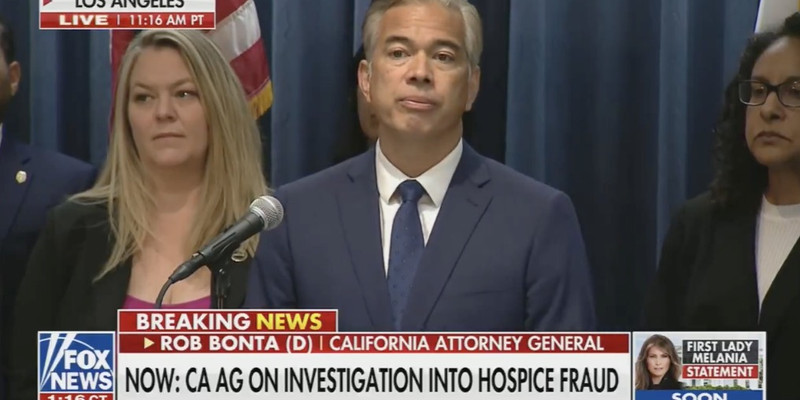
California officials have arrested five individuals tied to a massive $267 million hospice fraud scheme, raising serious concerns about government oversight and abuse of taxpayer-funded healthcare programs. Authorities say the accused collected millions without providing legitimate care, highlighting a growing problem that demands accountability.
🚨 BREAKING: Five people have just been ARRESTED in California after a crackdown targeting FAKE LA hospice centers
— Nick Sortor (@nicksortor) April 9, 2026
10 PLACES were raided last night
This SINGLE SCHEME resulted in $267 MILLION in bogus charges to American taxpayers
KEEP ARRESTING, AND MAKE EXAMPLES OUT OF THEM pic.twitter.com/9pwPgHJUex
California authorities have taken decisive action against what appears to be a staggering case of healthcare fraud, arresting five individuals connected to a $267 million hospice scheme in Southern California.
State Attorney General Rob Bonta announced the arrests, revealing that law enforcement executed search and arrest warrants across ten separate locations. According to Bonta, this operation is part of a broader effort to crack down on widespread abuse within the state’s healthcare system.
What makes this case especially troubling is the sheer scale of the alleged fraud—and the complete absence of legitimate services. Officials say the defendants did not provide a single genuine hospice service, despite collecting hundreds of millions of dollars in taxpayer-funded payments.
“Yesterday, we successfully executed search and arrest warrants at 10 separate locations and arrested five suspects so far throughout Southern California,” Bonta stated. He described the operation as another example of ongoing efforts by the California Department of Justice to combat medical and hospice fraud.
This case is not happening in isolation. In recent weeks, growing media coverage and federal investigations have exposed a troubling pattern of so-called hospice providers operating without delivering real care. These schemes exploit vulnerable systems meant to serve the elderly and terminally ill—while draining public resources in the process.
For taxpayers and families alike, the implications are serious. Programs designed to provide compassionate end-of-life care are being manipulated for profit, raising urgent questions about oversight, enforcement, and accountability.
As California continues to uncover these abuses, one thing is clear: stronger safeguards are needed to ensure that public funds serve the people they were intended to help—not those looking to game the system.
