
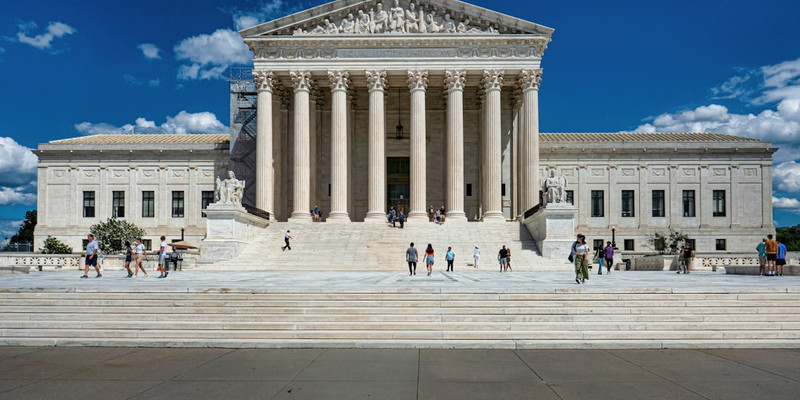
During a high-stakes Supreme Court hearing, justices appeared skeptical of former President Donald Trump’s effort to end automatic birthright citizenship for children of illegal immigrants. While the administration argued from historical and constitutional grounds, liberal justices pushed back—at times with strained analogies—highlighting the deep divide over the meaning of American citizenship.
The Supreme Court heard arguments this week in a case challenging Donald Trump’s executive order aimed at ending birthright citizenship for children born to illegal immigrants and non-permanent residents. From the outset, it was clear the justices—particularly those on the left—were wary of the administration’s position.
Representing Trump’s case, U.S. Solicitor General John Sauer grounded his argument in the original meaning of the 14th Amendment. He emphasized that the Citizenship Clause was intended to secure rights for freed slaves and their descendants—individuals with established ties and allegiance to the United States—not for those in the country unlawfully or temporarily.
Sauer pointed to historical language like “not subject to any foreign power,” arguing that citizenship was never meant to extend to individuals who maintain primary allegiance elsewhere. He warned that the modern interpretation of birthright citizenship has created incentives for illegal immigration, fueled birth tourism, and weakened the value of American citizenship.
Chief Justice John Roberts, however, expressed skepticism. He questioned whether the narrow historical examples cited—such as children of diplomats or enemy forces—could reasonably be expanded to cover the broad category of illegal immigrants. His concern reflected a recurring theme during the hearing: whether the Constitution’s original meaning can be applied cleanly to modern immigration realities.
Justice Elena Kagan echoed that doubt, arguing that the administration’s interpretation leaned heavily on obscure historical sources rather than the plain meaning of the text. She suggested the argument stretched beyond what the 14th Amendment clearly supports.
Meanwhile, Justice Samuel Alito raised practical concerns, noting that illegal immigration as we know it today didn’t exist when the amendment was written. He questioned how courts should apply broad constitutional principles to issues the framers never anticipated.
On the opposing side, ACLU attorney Cecillia Wang defended the long-standing interpretation that anyone born on U.S. soil is automatically a citizen. She warned that changing this standard could put millions of Americans’ citizenship into question—a claim that reflects the high stakes but also the sweeping assumptions often made by opponents of reform.
Perhaps the most unusual moment came from Justice Ketanji Brown Jackson, who attempted to explain “allegiance” through an analogy involving a U.S. tourist stealing a wallet in Japan. Her argument suggested that even temporary presence in a country creates a form of legal allegiance.
But critics would argue that such comparisons blur the line between temporary legal jurisdiction and the deeper, enduring allegiance that citizenship implies. The distinction lies at the heart of the case: whether merely being born on U.S. soil is enough, or whether true citizenship requires a more meaningful connection to the nation.
At its core, the debate reflects a broader question about national identity, sovereignty, and the rule of law. Should citizenship be an automatic entitlement, or a privilege tied to lawful presence and genuine allegiance?
The Court’s eventual ruling could redefine one of the most fundamental aspects of American life—and determine whether the Constitution is interpreted through its original meaning or reshaped to fit modern political pressures.
