They Fired Missiles at Our Ships. The White House Called It a 'Love Tap.' Pay Attention.
- by:
- 05.08.2026
- Source:
fafodispatch.com

- 05/08/2026
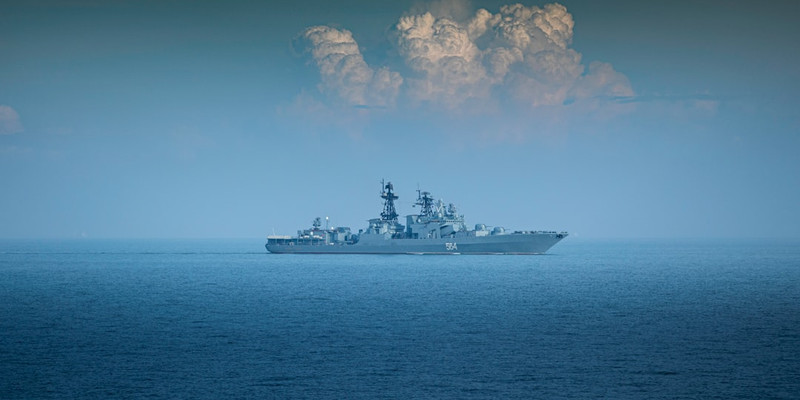
Russian Destroyer Admiral Tributs, DDG-564 plying the sea. by Abdullah Al Hasan is licensed under Unsplash unsplash.com
Think about what that means. Three of your Navy's ships. Missiles. Drones. Swarming boats. In open water. A direct attack on American military assets.
The White House called it a love tap.
No, seriously. "Just a love tap," the president said. The Pentagon announced a ceasefire was holding. U.S. Central Command carried out what it called "self-defense strikes" on Iranian military targets and port areas. The attackers were, in the president's words, "completely destroyed." And the official story is: situation handled, everything's fine, move along.
But here's what nobody will say out loud.
A ceasefire where one side is still firing isn't a ceasefire. It's a negotiation conducted with live ammunition. That's not a political attack on the administration. That's an accurate description of what's on the record. Washington Examiner reporters, who give this White House considerable benefit of the doubt, described the situation plainly as an "oxymoronic shooting ceasefire." That's not spin. That's journalism.
So ask yourself: which part of this story is the public actually being given?
The U.S. military did its job. Let's be clear about that. The attacking forces were destroyed. American ships and sailors are intact. The men and women on those destroyers performed exactly as they should have. That's real, and it matters.
But now ask the next question. Why is a country that is supposedly in a ceasefire still launching missiles and drones at American warships?
The establishment answer is that this is complicated. Iran is a complex situation. The Strait of Hormuz matters for global commerce. There are diplomatic back-channels. We're in a delicate phase. Trust the process.
That's not an answer. That's a management strategy for your attention.
Here's what's actually on the record. The Trump administration launched Operation Epic Fury on February 28th, alongside Israel, targeting Iranian military infrastructure. Secretary of State Marco Rubio then announced the end of offensive operations. The White House has promoted a narrative of decisive victory — Iran defeated, they know it, the world knows it, the message has been sent.
Meanwhile, Senator Adam Schiff went on television and said Iran "feels the president is desperate for a deal," and that what's being discussed "sounds a lot like the deal" the Obama administration struck years ago. Now, Schiff has obvious reasons to frame it that way. He's a Democrat and a political opponent of this administration. Maybe he's completely wrong. Probably he is.
But the underlying question deserves a straight answer that the White House hasn't yet provided: is what the United States is negotiating with Iran a fundamentally different arrangement from what came before — or is it structurally similar under a different name?
The American people deserve to know. Not because the president is wrong to pursue a diplomatic resolution. Diplomacy, where possible, is preferable to extended armed conflict. But the terms matter enormously. And the public is currently receiving slogans, not clarity.
Here's why this matters beyond foreign policy mechanics.
The way the ruling class communicates about war — or about whatever this is — tells you something important about how they view the people they're talking to. "Love tap" is a phrase designed to manage your reaction, not inform it. It tells you: don't be alarmed, it's under control, go back to what you were doing.
But Iranian missiles aimed at American destroyers are always serious. The sailors on those ships would tell you that. Their families would tell you that.
When a government describes a missile attack on its own Navy as a love tap, it isn't speaking to citizens. It's speaking to an audience it's trying to calm down. Those are different things.
There's nothing wrong with projecting confidence. Confidence matters in geopolitics. What's different is using confidence-signaling language as a substitute for honest accounting. The American public, when it comes to their military and to war, deserves honest accounting.
The ceasefire is fragile — every account confirms this. Iranian forces just demonstrated they are still willing to fire on American ships. The diplomatic track is moving somewhere, and the direction of that movement is genuinely unclear.
Pay attention to this story. Not because the military failed — it didn't. Not because the president is necessarily wrong — the final terms of any arrangement aren't yet known. But because the people managing the public narrative around this conflict have already demonstrated they prefer smooth phrases to hard facts.
"Love tap."
They chose that phrase deliberately. It was designed to make you feel like nothing significant happened.
Something significant happened. On American ships, with American sailors aboard. In a body of water through which a fifth of the world's oil flows.
