
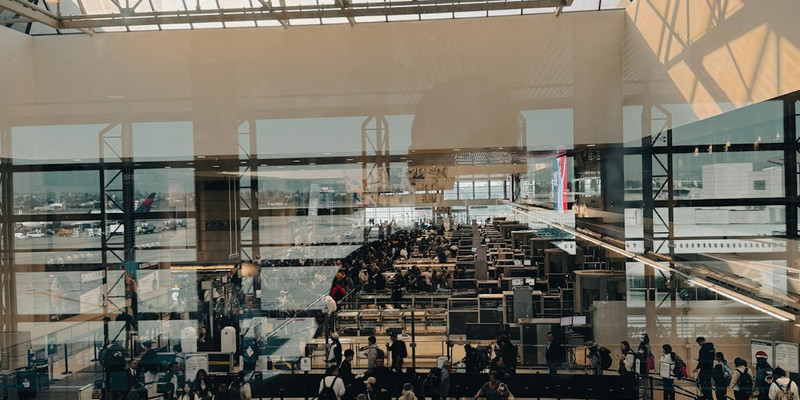
WASHINGTON — The Department of Homeland Security partial government shutdown, now in its sixth week, has produced its most visible consequence yet: immigration enforcement agents began airport security screening duties Monday as Transportation Security Administration absences reached their highest level since the funding lapse began.
Approximately 11.5 percent of TSA staff were absent nationwide on Sunday, according to figures provided by the Department of Homeland Security — the highest absence rate recorded since the DHS funding lapse began February 14. The absences, attributed to the shutdown's impact on agency morale and pay, have produced significant delays at major airports across the country.
Transportation Secretary Sean Duffy said Sunday he expects conditions to worsen. "This is going to get much worse," Duffy said, framing the escalating airport delays as leverage against Senate Democrats. "That pressure will fall on the Democrats who have refused to fund DHS."
President Donald Trump has set one non-negotiable condition for any resolution: passage of the Safeguarding American Voter Eligibility (SAVE) Act, which would require documented proof of citizenship to register to vote in federal elections. Trump posted to social media Sunday that "no deal should be made on DHS funding until they approve the SAVE Act."
In a subsequent post, Trump signaled he is open to a $5 billion reduction in ICE funding as part of a broader package — provided the SAVE Act is included. The offer suggests the administration is prepared to negotiate on funding levels but not on the citizenship verification requirement itself.
Senate Democrats have repeatedly blocked the SAVE Act, arguing it would suppress participation among eligible citizens who lack easy access to citizenship documentation. Republicans counter that the bill is a straightforward requirement to ensure only citizens vote in federal elections.
Trump announced the ICE airport deployment Saturday, framing it as a necessary stopgap to prevent shutdown-driven travel disruptions from damaging the broader economy. The White House did not specify how many ICE personnel would be redirected to airport duties or for how long the deployments would continue.
ICE agents and officers have expressed mixed reactions to the reassignment. Some within the agency view the airport deployment as a diversion from their core immigration enforcement mission. Others have indicated willingness to assist given the circumstances.
The TSA absence rate has climbed steadily since the shutdown began. On the first day of the lapse, absences ran approximately 4 percent above baseline. By mid-March, the figure had reached roughly 8 percent. Sunday’s 11.5 percent rate marks the third consecutive week of record-setting figures.
The DHS partial shutdown has left approximately 240,000 DHS employees either working without pay or furloughed, depending on their designation as essential or non-essential personnel. A federal judge last week declined to block the administration from continuing DHS operations under the lapsed appropriation, removing one avenue Senate Democrats had hoped to use to force a resolution.
Senate Majority Leader John Thune has indicated he is working toward a deal but has not publicly endorsed the SAVE Act as a precondition. Senate Minority Leader Chuck Schumer has not signaled any movement toward accepting citizenship verification as a condition of DHS funding.
A House Republican spokesman said Monday that leadership "remains firm" on the SAVE Act requirement and does not expect the position to change.
The standoff has no publicly discussed resolution timeline. The next scheduled Senate working period begins after a congressional recess ending the week of March 30.
