
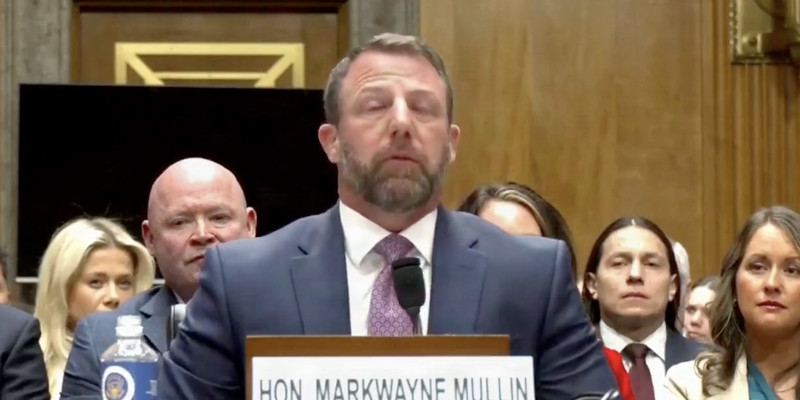
In an emotional confirmation hearing, Senator Markwayne Mullin shared a deeply personal story about how President Donald Trump stood by his family during one of the hardest moments of their lives. Mullin described the life-altering brain injury his son suffered in 2020 and the steady, private support Trump gave without fanfare, cameras, or political calculation.
During his confirmation hearing before the Senate Homeland Security Committee on Wednesday, Senator Markwayne Mullin became emotional as he recalled the compassion President Donald Trump showed his family after his son suffered a traumatic brain injury in January 2020.
Mullin said his son, once a top-level athlete who had competed in wrestling around the world since childhood, nearly died after the injury. For more than a day, his condition was critical. When he finally woke up, he was no longer the same. He struggled with memory, movement, coordination, and even basic learning skills. According to Mullin, his son had to relearn how to read, walk, and function day to day.
Mullin said President Trump called as soon as he learned what had happened. In a moment that brought some light into a dark season, Trump joked that Mullin’s son could not remember his own parents, but he still knew who the president was. But once Trump understood how serious the situation was, Mullin said he immediately stepped in to help.
Mullin explained that the family needed to get his son to one of the best neurological rehabilitation centers in the country, located in California. Trump offered the use of his personal plane to get them there. Although the family ended up driving instead, Mullin said Trump continued to call nearly every day for two weeks to check on his son’s condition.
Even while campaigning during a tough election year, Trump made time to visit Mullin’s son in person. Mullin said that when staff tried to hurry the president along, Trump refused to leave until he had spent time with the boy. For those precious minutes, Mullin said, Trump gave his son his full attention, encouragement, and care.
Doctors had told the family that a single meaningful moment could help trigger progress in his son’s recovery. Mullin said that after Trump’s visit, something changed. His son began retaining information again and started moving forward in ways he had not before.
According to Mullin, the president kept checking in for weeks, often asking how “his buddy” was doing and what else he could do to help. Mullin stressed that Trump did not do any of it for headlines or praise. He was in the middle of a major campaign, yet still made Mullin’s family a priority.
Later, after his son was released from the rehabilitation center, Trump invited the family to visit Mar-a-Lago. As they were leaving, Mullin said Trump pulled his son aside and asked if he knew why he loved his father. When the boy said no, Trump answered plainly: because he loves you.
Mullin closed by saying that before this experience, he and Trump were merely acquaintances. After walking through that trial together, they became friends. His testimony offered a personal reminder that leadership is not only measured in public speeches and political fights, but also in quiet acts of loyalty, compassion, and presence when families need it most.
