Thucydides, writing of the slow unraveling of Athenian power in the fifth century before Christ, observed something that modern strategists tend to rediscover only after catastrophe: that empires do not fall primarily because of military weakness, but because of a failure of will. Athens possessed the ships, the treasury, and the manpower to prosecute the Peloponnesian War. What it ultimately lacked was the moral coherence to remain resolute when the cost of resolution became unmistakable.
The remains of American service members killed in the Middle East arrived home at Dover Air Force Base on Wednesday. President Donald Trump flew to receive them — a dignified transfer of those who paid the ultimate price in what has now become an open military confrontation with the Islamic Republic of Iran. The president, before departing from Joint Base Andrews, told reporters that Americans are not opposed to this war. Whether that assessment proves accurate will depend on questions that lie beyond the immediate battlefield: questions of resolve, of historical self-understanding, and of whether a civilization remains capable of acting in defense of its own interests.
These are not new questions. They are, in fact, the permanent questions of any republic that aspires to remain free.
The immediate provocation is clear enough. Iran has been threatening shipping through the Strait of Hormuz, a twenty-one-mile-wide waterway through which roughly one-fifth of the world's oil supply travels on any given day. The regime of the Islamic Republic — which has spent nearly half a century exporting terrorism, arming proxies from Gaza to Yemen to Iraq, and chanting for the destruction of Israel and the humiliation of the United States — has now made explicit threats against vessels transiting that passage. President Trump's response was characteristic in its directness: for every ship Iran fires upon, the United States will destroy one of Iran's bridges or power plants. Ten times harder, he has promised, for every escalation.
It is worth pausing on that formulation. Not to evaluate it tactically — military planners are better equipped for that — but to understand what it represents philosophically. It is the language of deterrence, which is the language of credibility, which is ultimately the language of character. A threat is only as credible as the reputation of the one making it. And the history of American foreign policy in the preceding generation — the red lines that were drawn and erased, the deadlines extended, the rhetorical commitments dissolved at the first sign of domestic political cost — had done serious damage to that credibility.
Tocqueville, visiting America in the 1830s, identified what he considered the structural vulnerability of democracies in foreign affairs. The people who must bear the cost of war, he noted, are the same people who vote on whether to pursue it — a dynamic that tends to produce either premature withdrawal or, worse, the paralyzing reluctance to commit at all. The democratic instinct, when confronted with the prospect of casualties, is to look for an exit. That instinct is not ignoble; it reflects a genuine valuation of human life. But it becomes catastrophic when adversaries correctly identify it as exploitable.
Iran has been exploiting it for decades.
The mullahs have governed by a consistent strategic logic: probe, test, retreat when credibly threatened, then probe again. The hostage crisis of 1979 revealed how much a revolutionary theocracy could extract from a democracy that prized optics over consequences. The attacks on American forces in Iraq, the arming of Hezbollah, the funding of the Houthi campaign against Red Sea shipping — each of these represented a calculated bet that the cost of American response would exceed the American appetite for confrontation. For much of the period between 2001 and 2024, that bet paid off.
What changed is not merely a president or an administration. What changed is the underlying disposition of a nation that had grown weary of being told it had no right to respond to aggression. There is something clarifying, if painful, about receiving the remains of servicemen and -women who died in a conflict that most Americans could not have located on a map a year ago. It converts abstraction into reality. It forces the republic to decide what it believes.
The Federalist Papers, written by men who had just emerged from a war of survival, are saturated with a sober awareness of this dynamic. Madison, Hamilton, and Jay understood that a republic that could not defend itself was not a republic for long. They were not militarists; they were realists. They knew that the capacity to project power and the willingness to exercise it were preconditions for the kind of ordered liberty they were attempting to build.
Those preconditions have not changed. What has changed is the willingness of the West's own intellectual class to assert them.
We live in an era in which the moral vocabulary of Western civilization has been turned against itself — in which strength is reframed as aggression, deterrence as provocation, and the defense of national interest as some form of atavistic violence best transcended by enlightened multilateralism. The institutions that were built to encode and transmit that vocabulary — the universities, the press, the cultural establishments — have for several decades now been actively hostile to the premises of Western self-defense. The result is a civilization that has all the material capacity to defend itself and, in certain precincts, lacks the moral permission to do so.
The men and women at Dover Air Force Base paid the price for what happens when that moral permission is withheld too long. They serve in a conflict that became unavoidable partly because their predecessors' warnings were dismissed, their country's deterrent signals were ignored, and the regime that killed them was permitted to conclude that the cost of escalation was lower than the benefit.
Trump's threat to destroy Iranian infrastructure is not, at its root, a military strategy. It is a moral statement: that the lives of American service members have a value that will be enforced, not merely mourned. That the Strait of Hormuz is not a free concession to whatever regime controls the adjacent shoreline. That the republic still means what it says.
Whether it does — whether the will holds, whether the institutions support the commitment, whether the American people retain the civic fortitude to see it through — is the civilizational question of the moment. Thucydides would recognize it immediately. He spent his entire career documenting what happens when the answer is no.
The answer, for the sake of the fallen and for everything that follows them, must be otherwise.
Deterrence, Fallen Heroes, and the Civilizational Stakes of the Iran Confrontation
- by: Cole Ryder
- 07.24.2026
- Source:
fafodispatch.com

- 07/24/2026
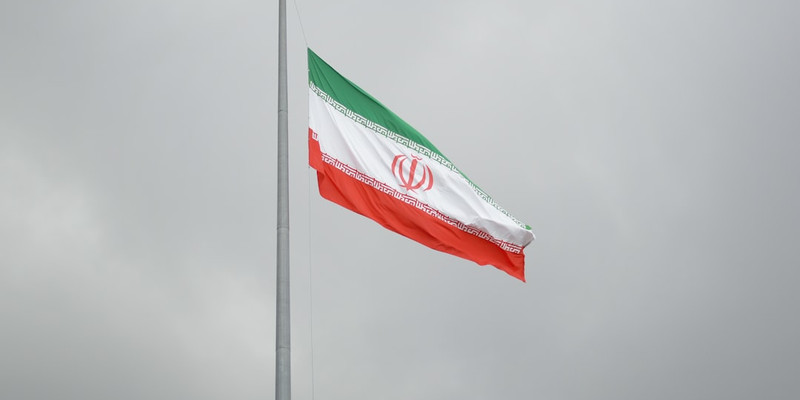
A flag flying in the wind on a cloudy day by sina drakhshani is licensed under Unsplash unsplash.com
