Here's what the Supreme Court decided Monday. States can count mail-in ballots that show up after Election Day. Not a few minutes after. Not a few hours after. After. The day is over, the polls are closed, and somewhere out there, ballots are still making their way to county election offices — and they count.
Barrett sided with the liberals. Roberts too.
The vote was 5-4. Justice Samuel Alito, in dissent, didn't mince words. This decision, he wrote, opens "Pandora's box" on voter fraud. That's not a political talking point from a Republican senator. That's the considered legal judgment of a sitting Supreme Court justice describing what his colleagues just handed the American Left.
Think about what that actually means.
Election Day used to mean something. It meant you had until the close of business to cast your vote, and then the counting began. Results came in that night or the next morning. The country moved on. Every functioning democracy on the planet operates on some version of this principle — a deadline, enforced, that marks the end of the voting period.
After Monday's ruling, that deadline is officially negotiable.
Senator Eric Schmitt of Missouri, not known for overstatement, called the ruling "shockingly wrong." Republicans across Washington are scrambling for a response. The answer they've landed on is the SAVE America Act — legislation designed to establish hard federal standards for election integrity, including deadlines for ballot receipt. Trump posted Monday that the SAVE Act is now "even more important" in light of the decision. Speaker Johnson said he plans to attach it to the annual defense spending bill.
That's the play. Whether Republicans have the discipline to follow through is another question.
But let's talk about Amy Coney Barrett.
Trump nominated her in 2020, and the right rejoiced. A brilliant Catholic jurist. A textualist. The constitutional restoration was finally at hand. Conservatives were ecstatic. They had their supermajority.
And now she has sided with the three liberal justices to let post-Election Day ballots flow in. Trumpworld, according to multiple reports, is "obviously" feeling buyer's remorse.
Here's the hard truth nobody in Washington will say plainly: the Supreme Court was never going to save American elections. It can't. Courts interpret laws. They don't write them. If Republicans want a hard deadline for ballot receipt, they need to legislate one. That's what the SAVE Act does. That's why it matters.
Now, about the argument on the other side. Supporters of the ruling say restricting mail-in ballot receipt windows disenfranchises voters who mailed their ballot on time and can't control postal delays. It's an argument that sounds reasonable in the abstract.
Ask yourself why it only ever gets raised when the ballots in question come from Democratic-leaning counties.
Alito's dissent should be read by every Republican in Congress. He understands exactly what the majority did: they eliminated a principled line. Once you remove the hard deadline, you have no logical basis for drawing a new one anywhere. Why not two days after? Why not a week? Why not until the canvass is certified and the challenges are exhausted?
The answer, Alito implies, is that there is no principled answer. That's the box that just got opened.
The 2026 midterms are four months away. Republicans are defending a narrow House majority and competing for Senate seats in states where close elections get decided by mail-in ballot margins. If they want to prevent a repeat of every contested election of the last decade — the late-night ballot dumps, the changing rules, the extended counting windows that always seemed to break one direction — they need to act now.
This isn't ideological. It's operational. Pass the SAVE Act. Attach it to the defense bill. Force a vote. Make Democrats go on the record about whether they think elections should have endings.
They should.
Five Supreme Court justices, including two that conservatives thought they could trust, just said that's debatable.
Alito said it isn't.
He's right.
Barrett Sided With Liberals on Mail-In Ballots. Alito Called It a Pandora's Box. He's Right.
- by: Cole Ryder
- 07.01.2026
- Source:
fafodispatch.com

- 07/01/2026
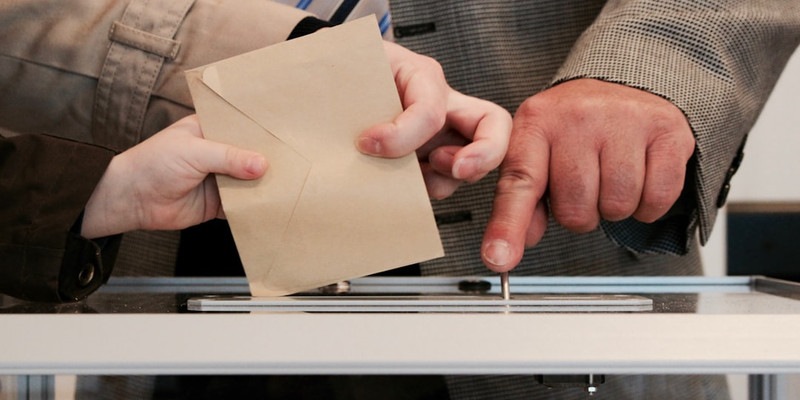
Symbol of democracy this picture show a child and his mom voting for french presidential elections. by Arnaud Jaegers is licensed under Unsplash unsplash.com
