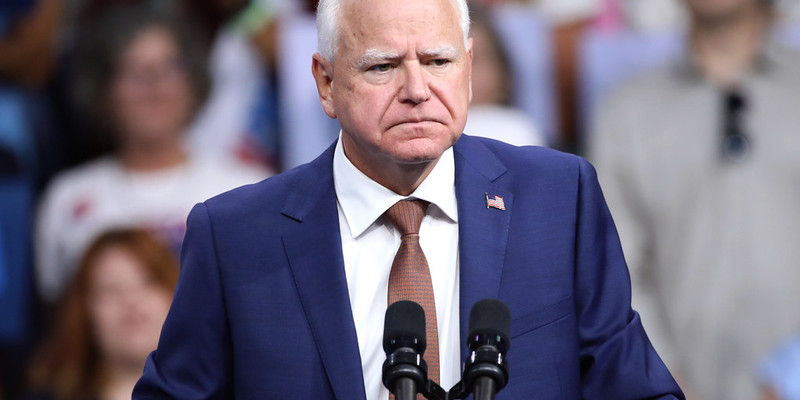
A House Oversight Committee report released Monday alleges that Minnesota Governor Tim Walz's administration was warned repeatedly about large-scale fraud in the state's social services programs and failed to act, allowing billions of dollars to disappear from public accounts over a period of years, according to Fox News.
The report accuses the Walz administration of turning "a blind eye" to the fraud warnings as funds vanished from programs designed to serve vulnerable Minnesotans, the outlet reported. Congressional investigators have been examining state-level administration of federally funded social programs, and the Walz allegations represent among the most prominent findings to emerge from that inquiry.
Walz, who served as Kamala Harris's vice presidential running mate in the 2024 presidential election, has been governor of Minnesota since January 2019. He remains one of the more visible figures in national Democratic politics.
The Broader Investigation
The Walz-specific report arrives as Congress is conducting a parallel, broader inquiry. The House Energy and Commerce Committee has demanded records from eleven states as part of what the Washington Examiner described as "a widening investigation into potential Medicaid fraud." The relationship between that inquiry and the Walz-specific Oversight report was not immediately clear at the time of publication.
Social services programs — including Medicaid, federally subsidized childcare assistance, and nutrition programs — are administered primarily at the state level using a mix of state and federal funds. Federal inspectors general and the Government Accountability Office have documented persistent fraud vulnerabilities in these programs across multiple administrations and both parties. During the rapid spending expansion of 2020 through 2022, some federal oversight requirements were relaxed or waived, a decision that independent auditors later identified as a contributing factor in documented fraud across multiple states.
What the Report Alleges
The central allegation is that the Walz administration received fraud warnings — specific enough to require action — and did not respond in a manner consistent with their severity. The outcome, according to the committee, was that funds continued to flow out of programs despite evidence of fraudulent activity.
The characterization of losses in terms of "billions" places this allegation in a category requiring substantial documentation to substantiate. Congressional reports typically distinguish between confirmed fraud, suspected fraud, and funds flagged for review. The specific breakdown in the House Oversight report was not immediately available.
The use of the phrase "for years" in the committee's framing suggests investigators believe the failure to act was not a single oversight but a sustained pattern during Walz's tenure as governor.
Political Context
The timing carries obvious significance. Walz remains active in national Democratic politics, with his name discussed in some party circles in connection with future statewide or federal office. A congressional investigation alleging willful neglect of fraud at this scale would, if substantiated, represent a serious challenge to that trajectory.
Democrats have consistently characterized House Republican investigations of Democratic governors as politically driven. The Walz administration had not issued a public response to the report at the time of publication.
What Comes Next
Key questions that will shape the investigation's next phase: What documentation exists of the fraud warnings received by the Walz administration, and at what level of government were they delivered? What was the administration's recorded response at the time? How does the committee's estimate of vanished funds compare to figures from the state's own auditors and relevant federal oversight reports? Has the Department of Justice or the Department of Health and Human Services been referred any portion of the alleged fraud for criminal investigation?
The committee has signaled its inquiry will continue. A timeline for further hearings or formal document production demands had not been announced as of Monday.
Billions Vanished from Minnesota Programs. House Oversight Says Walz Knew.
- by: Cole Ryder
- 06.08.2026
- Source:
fafodispatch.com

- 06/08/2026
