If Iran Won't Deal, America Collects the Tolls. That's Not Crazy. That's Leverage.
- by: Cole Ryder
- 06.23.2026
- Source:
fafodispatch.com

- 06/23/2026
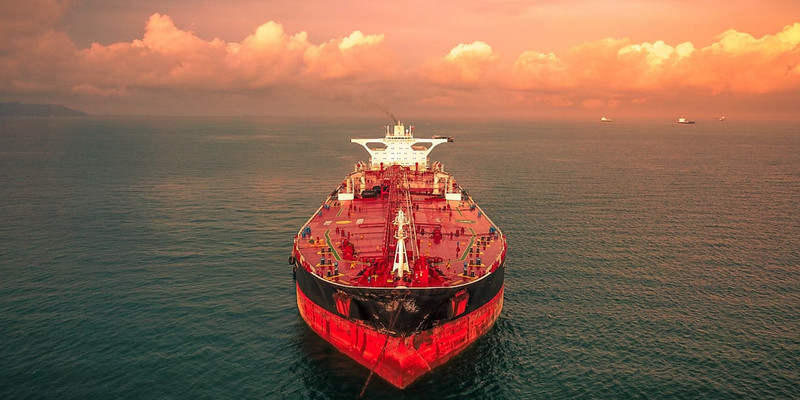
Merlion M at Johor, Malaysia by Fredrick F. is licensed under Unsplash unsplash.com
Here's something you're not supposed to notice. While vice presidents meet in Switzerland and diplomats talk about "technical negotiations" and "memoranda of understanding," the American president is threatening to literally take over the Strait of Hormuz. Not impose sanctions. Not write a strongly worded statement. Take. It. Over.
Think about what that actually means.
The Strait of Hormuz is not some obscure shipping lane. About 20% of the world's oil flows through it every day. Tankers from Saudi Arabia, UAE, Kuwait, Iraq — they all pass through that narrow channel between Iran and Oman. Whoever controls it controls something real. Oil markets, global energy prices, the financial stability of every country that needs petroleum to function. That's not a small thing.
And Donald Trump, on a Sunday afternoon, told Iran: if you don't make a deal, America becomes the guardian of that waterway. We collect the tolls. We take 20% of the oil.
"If they don't make a deal, we'll collect tolls," Trump posted on Truth Social.
Nobody in official Washington has said anything like this in decades. Maybe ever.
Now ask yourself: why is the establishment so angry about this?
Susan Rice went on ABC's This Week and called Trump's military action in Iran a "stupid war." The same Susan Rice who helped architect American foreign policy for eight years. The same Obama administration that sent Iran $150 billion in sanctions relief — which Iran then used to fund the exact proxies now threatening to destabilize Lebanon.
"Stupid" is a funny word coming from her.
The establishment doesn't actually have a problem with American power. They have a problem with American power being used for American interests. That's what they can't say out loud. Because if they said that, they'd have to admit that everything they've been doing for the last thirty years was power for its own sake — and for the benefit of a global order that was never designed with the American people in mind.
Trump is playing a different game. You can tell because they're this upset.
Here's the situation on the ground. Vice President Vance is in Switzerland right now, alongside Kushner and Witkoff, leading the first direct US-Iran talks since the signing of the Islamabad Memorandum of Understanding. Iranian officials entered the room insisting they will not give up their right to enrich uranium. At the same time, Trump warned Iran that Hezbollah — its proxy force in Lebanon — better stop causing trouble, or Tehran gets hit. And if the entire deal falls apart, America seizes the Strait.
That's not one negotiating lever. That's three, deployed simultaneously, in public.
Meanwhile, Iran's Islamic Revolutionary Guard Corps announced it was closing the Strait of Hormuz in response to Israeli strikes on Lebanon. Seventy-eight percent of Americans, according to a CBS News/YouGov poll released this weekend, say the US should end the conflict with Iran "now." And Homeland Security Secretary Markwayne Mullin revealed on Fox News Sunday morning that a man with "direct ties" to Iran's IRGC tried to enter the United States hidden within the Iranian soccer team traveling here for the World Cup.
Let that one sink in.
We're hosting an Iranian soccer delegation while Iran's special forces try to slip their people in with the team. Iran is threatening to close the global oil lanes while their diplomats smile in Switzerland. And the GOP hawks are appearing on cable news complaining that Trump is giving away too much leverage.
The GOP is now publicly divided over what victory looks like. Fox News reported Sunday that Trump's Iran gamble "divides GOP hawks and 'America First' conservatives." Men who've never set foreign policy without the blessing of the think-tank establishment are at odds with Trump's team over the deal framework.
Here's the honest read: the hawks want permanent tension with Iran because that tension justifies their budget requests, their think tanks, and their television hits. Trump wants a deal that benefits America — or failing that, control of the most important oil chokepoint on earth.
One of those outcomes actually helps regular Americans. The other helps the people who've been running this racket for thirty years.
Vance described Sunday's talks as "the beginning of a technical negotiation that's not going to solve every disagreement, but it's going to allow us to sit together as teams." Measured language for a first-round diplomatic session. But behind it sits a president who just said, in plain English, that if this doesn't work, America takes the Strait.
That's leverage. Real leverage. The kind that doesn't require a fifteen-page white paper from the Council on Foreign Relations to explain why it matters.
x
The establishment doesn't want you thinking clearly about this. Because if you do, you'll realize they never had a plan that served you. Trump does. Whether it works is a fair question. Whether it's smarter than the last thirty years of "smart diplomacy" is not.
