Spencer Pratt led the Los Angeles mayoral race by more than nine points on election night. Nine points. In a city of four million people, that's not a rounding error. That's a verdict.
Then the mail-in ballots showed up.
Day after day, dump after dump, the gap narrowed. By Sunday night, Nithya Raman — a self-described democratic socialist on the Los Angeles City Council — had overtaken Pratt entirely. The race is now heading to a November runoff between Raman and incumbent Mayor Karen Bass. No Republicans on the ballot. In the city that can't keep its lights on, can't keep the homeless off its streets, and can't stop its own neighborhoods from burning down.
Think about what that actually means.
A candidate leads by nine points on election night. In any functioning republic, that's over. But this isn't any functioning republic. This is California. And in California, the counting never really ends until the right person wins.
President Trump called it a "rigged election" Monday morning. He's right. The question is what anyone is going to do about it.
Here's what we know. First Assistant U.S. Attorney Bill Essayli — a Trump ally and the top federal prosecutor in Los Angeles — said publicly this weekend that California is "blocking a federal audit of its voter rolls." Not delaying it. Not slow-walking it. Blocking it. A state government is actively refusing to allow the federal government to verify who's eligible to vote in its elections.
Ask yourself why.
The answer isn't hard to find. Fox News reported that noncitizens were found on voter rolls in Democrat-run states — some of them had already voted in prior elections. The Republican National Committee laid out the documentation. This isn't a conspiracy theory. It's a documented, systemic problem in states where the ruling class has decided that election integrity is a threat to democracy.
That's the tell. They frame voter roll audits as voter suppression. They frame election night results as preliminary. They frame nine-point leads as statistical noise. What they mean is: we will count until we win.
Spencer Pratt connected Raman's late surge to "a statistic LA can't escape." He's not wrong to be suspicious. When a candidate gains back nine points across a week of mail-in ballot counting, the normal response — in a country with functional election oversight — is scrutiny. Forensic scrutiny. Not shrugs from the press and a moving-on ceremony from the political class.
Nithya Raman is a democratic socialist. That's not an epithet — that's her self-description. She sits on the Los Angeles City Council in the same city where Pacific Palisades burned to the ground, where the trial of the man accused of starting that fire is now underway, where Karen Bass was literally out of the country when the inferno consumed neighborhoods the city was supposed to protect. And now the voters of that city — or at least the ballots counted — have chosen to send two progressive women into a November runoff, ensuring Los Angeles stays on the trajectory that produced its current catastrophe.
Nobody in the establishment finds this suspicious. The ruling class doesn't live in the neighborhoods that burned. They don't ride the subway where people get stabbed. They don't drive through the encampments. They just count the votes.
What's the practical effect? Los Angeles, the second-largest city in America, will have a mayor in November chosen from among a democratic socialist and the woman who was out of the country when her city caught fire. That's the choice California is offering its people. Take it or leave it.
And if you object? If you question the mail-in methodology, the late counting, the federal audit that's being blocked? You're a conspiracy theorist. A threat to democracy. Whatever the establishment needs you to be that week.
Bill Essayli is the top federal prosecutor in the region. He went on the record. That matters. Federal law requires states to cooperate with voter roll audits. California is refusing. That is not a gray area.
Trump called it a rigged election. Essayli said California is blocking the audit. Pratt connected the late-ballot surge to a suspicious statistic. Three different voices, three different angles, all arriving at the same place: something is wrong, and the people who benefit from that wrongness are the same people who will dismiss anyone who says so.
At some point, the pattern becomes the story.
This isn't really about Spencer Pratt, who was always a long shot in a Democrat-dominated primary. This is about a system that has perfected the art of manufacturing outcomes. Mail-in ballots that conveniently accumulate after election night. Voter rolls that can't be audited. Federal prosecutors blocked when they try to verify the basics.
You're told to trust the process. The same people running the process are the ones telling you that.
Make of that what you will.
Spencer Pratt Was Up Nine Points. Then the Mail-In Ballots Showed Up.
- by: Cole Ryder
- 06.08.2026
- Source:
fafodispatch.com

- 06/08/2026
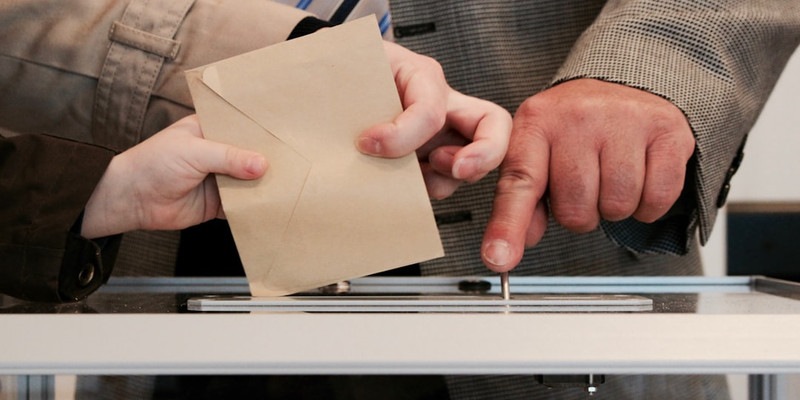
Symbol of democracy this picture show a child and his mom voting for french presidential elections. by Arnaud Jaegers is licensed under Unsplash unsplash.com
