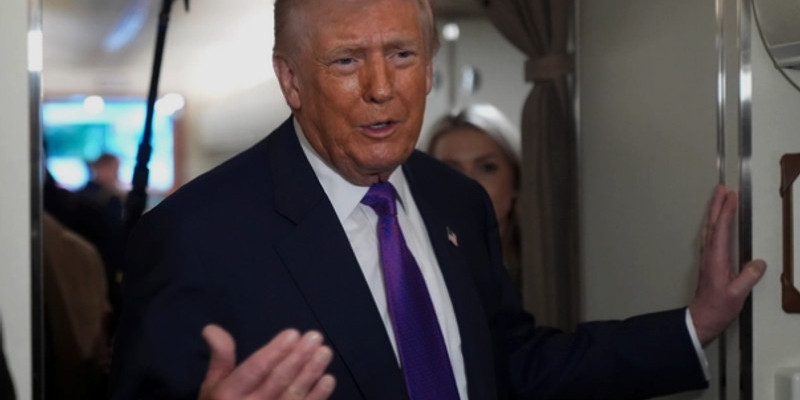
Trump just struck Iran. The ceasefire signed last week — the one everyone said was a diplomatic breakthrough — is now fraying. Iran attacked a cargo ship in the Strait of Hormuz. American aircraft responded with strikes on Iranian missile and drone storage facilities. Then Iran launched a drone assault on Bahrain and hit another ship.
That's the news. Now let's talk about what it means.
For years — through Obama, through the second term of Obama dressed up as Biden — the foreign policy consensus in Washington operated on a single principle: don't escalate with Iran. Send a strongly worded letter. Hold another round of negotiations. Give them pallets of cash and hope they behave. The regime in Tehran has been funding terrorism, threatening navigation in one of the world's most critical shipping lanes, and chanting "Death to America" for four decades. And Washington's answer was always: be careful, be measured, don't do anything that might upset the delicate balance.
That balance always seemed to favor Iran.
Think about what those years produced. Iran's nuclear program advanced. Iranian proxies operated across the Middle East. American sailors were detained, humiliated on their knees, and released with a press conference. The Strait of Hormuz — through which roughly 20 percent of the world's oil flows — remained a zone where Iranian-backed forces could attack commercial shipping with limited consequence.
The experts called this "strategic patience." What they meant was: we've decided not to win.
Donald Trump has a different approach. When Iran violated the ceasefire — when they attacked a commercial vessel in international waters — the response wasn't a stern statement from the State Department spokesperson. It was aircraft. American aircraft, striking Iranian missile and drone storage locations. Hard.
Ask yourself what the establishment theory actually predicted. They said confrontation would spiral into World War III. They said Trump was reckless. They said the only way to manage Iran was through multilateral frameworks and diplomatic channels. Every time someone suggested responding with force, the foreign policy class clutched their pearls and warned about "escalation dynamics."
Where did their approach lead? A ceasefire that Iran violated in days.
Nobody will say this, but the reason Iran keeps pushing is that they've been trained to push. For years, the consequences were minimal. The United States would respond with sanctions — already-existing sanctions — or diplomatic rebukes. Iran calculated, correctly, that the cost of aggression was manageable. You attack a ship, you get a statement from the White House. That's a trade they'd make every time.
Trump changed the calculation. When you hit Iranian missile storage facilities, you're not just sending a message — you're removing capability. They can't launch missiles from warehouses that don't exist anymore. That's how deterrence actually functions. It's not complicated. It was just ignored by people who preferred complexity to clarity.
Will Iran push back further? Possibly. They're already launching drones at Bahrain. The ceasefire is fraying. But here's what you don't hear from the foreign policy establishment: Iran doesn't want a full-scale war with the United States any more than the United States wants one with Iran. The regime's survival depends on the perception of resistance, not on actual destruction. When the cost of that resistance becomes too high, behavior changes.
We've seen this before. Reagan hit Libyan military installations in 1986 after the Berlin disco bombing. Muammar Gaddafi went quiet for years afterward. The pattern is older than the current foreign policy class's careers.
The media will spend the weekend agonizing about whether Trump's response was proportionate. They'll bring in former Obama administration officials to explain why striking Iranian military assets might antagonize the regime. They'll wonder aloud if this is a crisis.
It's not a crisis. It's a president doing what presidents are supposed to do.
Someone attacked an American-allied shipping lane. America responded with force. The world is watching. Iran is calculating. And the establishment — the people who spent years telling you there was no military option, that diplomacy was the only answer, that strength was provocation — are once again being proven wrong by someone they've spent years telling you couldn't be trusted.
Peace through strength.
Turns out it's not a bumper sticker.
Trump Hit Iran and the World Didn't End. Maybe That's the Point.
- by: Cole Ryder
- 06.30.2026
- Source:
fafodispatch.com

- 06/30/2026
