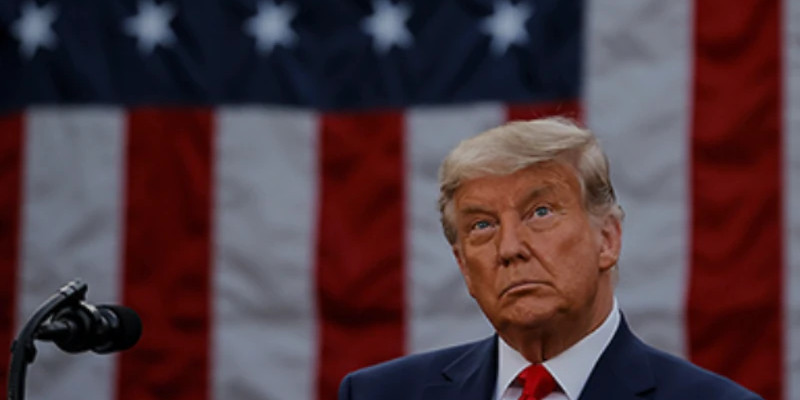
Two years ago today, a 20-year-old kid with a rifle climbed onto a rooftop 130 yards from the stage at a Donald Trump rally in Butler, Pennsylvania. He was there. People saw him. They called it in. And then Thomas Matthew Crooks fired eight rounds at the President of the United States, one of which grazed his ear by millimeters.
That's what happened.
Now here's what happened after: the government released a report. Two years later. The Department of Homeland Security Office of Inspector General has finally gotten around to documenting exactly how spectacularly the Secret Service failed that day. Trump, when asked about it this morning, had three words: "They blew it."
He's right. They did.
Think about what that actually means. The most sophisticated protection apparatus in human history — an agency with an annual budget exceeding $3 billion, agents trained to throw themselves in front of bullets — missed a gunman who set up in plain sight. He was on a rooftop within line of sight of the stage. They were warned. They did nothing effective. The shooter fired. A man named Corey Comperatore was killed. Two others were critically wounded.
The shooter had been identified as suspicious before the rally even started.
So ask yourself: who got fired? Who was court-martialed? Whose career ended in consequence?
The Secret Service director at the time resigned — not fired, resigned — six weeks later. Some agents were placed on administrative leave. Then the story moved on. The news cycle churned to the next thing. And the apparatus that failed to protect the front-runner for the presidency of the United States mostly kept humming along, processing its timesheets, building its org charts, preparing for the next assignment.
This is how institutions protect themselves. Not by rooting out incompetence. By waiting until the cameras move away.
Here's the thing that doesn't get said enough: the Butler failure wasn't a small procedural hiccup. It was a systemic collapse. Somebody cleared that rooftop line of sight or didn't bother to. Somebody decided the local police could handle the outer perimeter without direct radio integration. Somebody looked at a known risk zone and signed off. These are not isolated decisions by one low-level agent with a bad day. These are institutional choices, made by people with titles and salaries and security clearances.
And two years out, we have a report. Not accountability. A report.
Nobody will tell you this directly, but here's the honest read: if Thomas Crooks had been a better shot — if the wind had been slightly different, if Trump had turned his head half a second earlier in the other direction — we would be living in a fundamentally different country right now. The chain of events that follows a successful assassination of a major presidential candidate in 2024 is not something most Americans have allowed themselves to think through clearly.
The political class certainly didn't think about it on the front end. The same people who screamed about democracy dying every time Trump spoke didn't take the literal threat to his life seriously enough to put a second sniper on that building or clear the rooftops within rifle range of the stage.
The threats haven't stopped. Fox News reported this morning that the environment around Trump remains dangerous, two full years on. The new IG report reinforces what honest observers already knew: the security failures at Butler were not isolated. They reflected something deeper — an agency that had convinced itself it was prepared when it wasn't, and a political environment that made certain conversations about risk too uncomfortable to have.
Today should be a day of reckoning. Not performance. Not somber press releases and carefully worded condolences. An honest accounting of what broke, who was responsible, and what actually changed as a result.
Trump's verdict — "They blew it" — is the most accurate sentence spoken by any public figure on this subject since the shooting. It is also almost certainly more honest than what the political press will offer today. They'll run their anniversary think-pieces about the charged political climate. They'll center the shooter's radicalization. They'll find ways to distribute the blame so widely it lands on nobody.
Here's where it actually lands: the government failed to protect a presidential candidate from a shooter who was in position before the event started. The shooter fired. A man died. And the institution that failed spent two years producing a report instead of producing consequences.
Two years later, the ear is healed. The dead are still dead. And the apparatus that failed is larger than it was before, waiting for the next report it will take two years to write.
That's not how a serious country operates. It's how one convinces itself it's serious while avoiding the cost of actually being so.
Two Years After Butler: The Secret Service Failed, Nobody Was Fired, and Trump Almost Died
- by: Cole Ryder
- 07.13.2026
- Source:
fafodispatch.com

- 07/15/2026
